The Lenses of Geopolitics
The United States has no permanent friends or enemies, only permanent interests.
Chapter 3the lenses of geopolitics
The United States has no permanent friends or enemies, only permanent interests.
— — Henry Kissinger

We are now entering Part 2. Let's get started. the lenses of geopolitics.
A diplomat once said, "A nation exists to serve the greatest interests of its people." Yet, while this statement is simple, analyzing and understanding the underlying logic of these interests requires a specific framework. This is the lenses of geopolitics.
Approved the lenses of geopolitics, We can analyze the decoupling and strategic competition between China and the U.S., as well as the opportunities these shifts create for ASEAN nations.
These opportunities not only impact the regional economy but also offer new directions for individuals and businesses. Therefore, through these lenses, We will comprehensively analyze the current geopolitical landscape and its potential economic impacts to determine the most advantageous direction for going global.
Section 1: What Does Geopolitics Analyze?
Geopolitics is an academic concept that examines how a nation's geographic conditions influence political affairs. It focuses specifically on the impact of location, resource distribution, terrain features, climate conditions, and maritime trade routes on national strategy.
These factors play a critical role not only in military and territorial disputes but also in economic sanctions and trade interactions, as geopolitics reflects the dynamic relationships between nations regarding resource access, technology, and market competition.
Analyzing China's relationship with ASEAN countries from a geopolitical perspective often reveals the core issues. As China's immediate neighbors, ASEAN nations maintain close ties with it.
Therefore, in global expansion strategies, geographic proximity makes interactions more targeted and positions geopolitics as a key tool for understanding this relationship.
Geopolitical experts typically assess a country's influence across culture, economy, politics, and defense. By analyzing the importance of these domains, they score international standing and compare relationships with neighboring countries to derive insights.
For example, the Lowy Institute, an Australian think tank, presents a typical geopolitical analysis model in its "Asia Power Index: China vs. United States in Southeast Asia." The report compares changes in Chinese and U.S. influence in Southeast Asia between 2018 and 2022. Findings show that in 2022, China scored 70 points on economic influence in Southeast Asia, while the U.S. scored only 30. However, in defense, China received 28 points compared to the U.S.'s significantly higher score of 72. These analyses are often accompanied by visual charts, making it easier to see at a glance where each country holds advantages or faces gaps across different domains.
Leveraging the systematic analysis of geopolitics provides a more scientific, quantifiable, and intuitive way to understand the underlying logic of ASEAN nations' international engagement, while offering reference for formulating regional cooperation strategies.
Insightful geopolitical analysis
For example, if answering a hypothetical question: In the context of the US-China trade war, when Southeast Asian countries are forced to choose sides, will they choose China or the United States?
Before 2023, fewer than 40% of countries leaned toward China, with most still preferring to follow the United States. This choice was primarily driven by U.S. dominance in economic, political, military, and cultural spheres.
However, by 2024, the situation changed dramatically. More than half of the countries began to prefer cooperating with China.
So the question arises: Did China's years of engagement in Southeast Asia suddenly yield major results overnight? No, not really. Without a geopolitical perspective, it's hard to understand the deeper reasons behind this.
It is now clear that in 2024, Israel's attack on Hamas triggered strong reactions across the Islamic world. This event made many Muslim-majority countries feel that the U.S. stance was unfair due to its obvious support for Israel. Notably, Indonesia and Malaysia have large Muslim populations. For these nations, establishing close ties with a country perceived as "unfair" is clearly inappropriate.
Protests erupted across the U.S., with police and military entering campuses to disperse student demonstrators at over a dozen universities. More than 2,000 students and faculty were arrested. The root cause is U.S. support for Israel, which has sparked strong outrage among many in the Muslim world.
This seemingly localized event, amplified by population dynamics, has triggered widespread geopolitical repercussions.
From a geopolitical perspective, this event indirectly shifted Southeast Asian nations' attitudes toward China and the United States. Due to cultural and religious ties, many countries in the region have grown more inclined to strengthen cooperation with China, thereby diminishing U.S. influence in the area.
Section 2:the lenses of geopolitics cross-border expansion
When discussing geopolitics and global expansion, it's essential to recognize the surge of new terminology in this field over recent years. Familiarity with these terms naturally reveals the underlying logic connecting geopolitics, international growth, and global supply chain restructuring.
China+1: For example, the "China+1" strategy, as well as similar approaches like "Taiwan+1" or other "+1" strategies. These concepts center on how shifts in US-China trade relations and geopolitical dynamics are driving a restructuring of global supply chains.
In the past, companies relied on single supply chains, but this model is now being disrupted. Countries are increasingly requiring partners to diversify their production bases.
For example, U.S. buyers may explicitly require suppliers to establish factories outside of China; otherwise, they will not place orders. The reason is simple: they fear supply disruptions due to trade sanctions or geopolitical conflicts.
Friend-shoring and near-shoring: These "+1" strategies are typically implemented in allied nations or countries that meet geopolitical criteria. For instance, former U.S. President Trump emphasized that only members of the dollar system qualify as economic allies; outsourcing a segment of the supply chain to them—known as friend-shoring—is essential to safeguarding U.S. interests.
Trump aggressively promoted "nearshoring," encouraging companies to relocate production facilities back to the U.S. or nearby regions like Mexico and Canada. The Rust Belt in the Midwest is seen as a core area for economic revitalization.
MAGA (Make America Great Again). Originally, the supply chains for U.S. consumer products were largely outsourced and manufactured in other countries. Following the logic of friend-shoring and near-shoring, the ultimate outcome would be to bring production back to the U.S., ensuring supply chain, dollar, and job returns—aligning with former President Trump's concept of "Making America Great Again."
Long chains, short chains, and multipolarity. The greatest impact of geopolitics on supply chains is their shortening. In the past, global supply chains were typically long-chain models: multiple countries participated in production, with each stage connected through international transport loops to complete products before selling them to target markets.
However, long-chain models are vulnerable to geopolitical conflicts, leading companies to shift toward short-chain models. In a short-chain model, products are produced and sold within a single region, reducing risk while improving efficiency.
However, this shift brings new challenges. For instance, companies must deploy production facilities across multiple regions to serve local markets closer to home, leading to a multipolar structure. This inevitably increases capital investment and demands higher operational and management capabilities.
Tariff and non-tariff barriers. Moreover, both are key drivers of current supply chain restructuring. Tariffs involve only changes in numerical rates, while non-tariff barriers entail deeper restrictions such as technology embargoes.
For example, high-end technologies such as extreme ultraviolet (EUV) lithography machines have been added to export control lists. These technology restrictions have had a qualitative impact on the supply chain. Huawei's push to develop the HarmonyOS was driven by the need to address these challenges posed by technology bans. In contrast, tariffs represent a quantitative change, while technology bans entail a qualitative shift with far more profound consequences.
Decoupling and Precision Decoupling. Against the backdrop of U.S.-China strategic competition, "decoupling" has become a critical issue. The Trump 1.0 administration believes that broad decoupling strategies have limited effectiveness; therefore, the upcoming "Trump 2.0" approach is likely to implement decoupling policies more precisely.
This precision decoupling focuses on specific technologies and key sectors, aiming to restrict technology transfers to China through targeted measures.
Nevertheless, many GPU chips continue to enter China via Southeast Asia, indicating that the ban is not fully effective. This targeted decoupling will be a key escalation in future trade wars and a critical variable shaping global supply chains and trade dynamics.
Section 3: Put on the lenses of geopolitics, Choose your overseas market
A geopolitical perspective helps us identify the most advantageous markets for expansion. Each country has unique characteristics that determine whether they complement a company's strengths or create headwinds.
These unique aspects include geographic location, demographic composition, cultural and legal systems, military stance, and tariff agreements. A geopolitical analytical framework can help systematically organize this information.
We begin with a brief overview, followed by an in-depth case analysis featuring sharp insights.
Let's start with Vietnam. Located right next to China, it offers the most convenient logistics. Its industry focuses on light manufacturing, and its labor force has long been seen as abundant and low-cost. Since the US-China trade war, Vietnam has emerged as the biggest beneficiary, attracting significant industrial relocation.
Among other Southeast Asian countries, Thailand and Malaysia each have their own strengths.
Thailand has a strong automotive manufacturing base and is well-developed in electric vehicle production and its related parts supply chain.
Malaysia stands out in AI and semiconductor sectors, emerging as a hotspot for ASEAN data center investments. Leveraging its land resources, power grid, and renewable energy support, it has attracted major tech giants like Microsoft, Amazon, and Google to invest in cloud computing and AI infrastructure.
Indonesia is rich in natural resources, with particular strengths in energy, solar power, and batteries. It has abundant renewable energy reserves and significant development potential. Additionally, its large population makes it an important consumer market.
Later, we will analyze several key points in depth using case studies. For now, however, we must first gain a comprehensive understanding of how geopolitics influences the factors driving global expansion.
the lenses of geopolitics Three Key Factors for Deciding Your Global Expansion Direction
Utilize the lenses of geopolitics, When analyzing the impact of the US-China trade war on cross-border expansion, there are three key points.
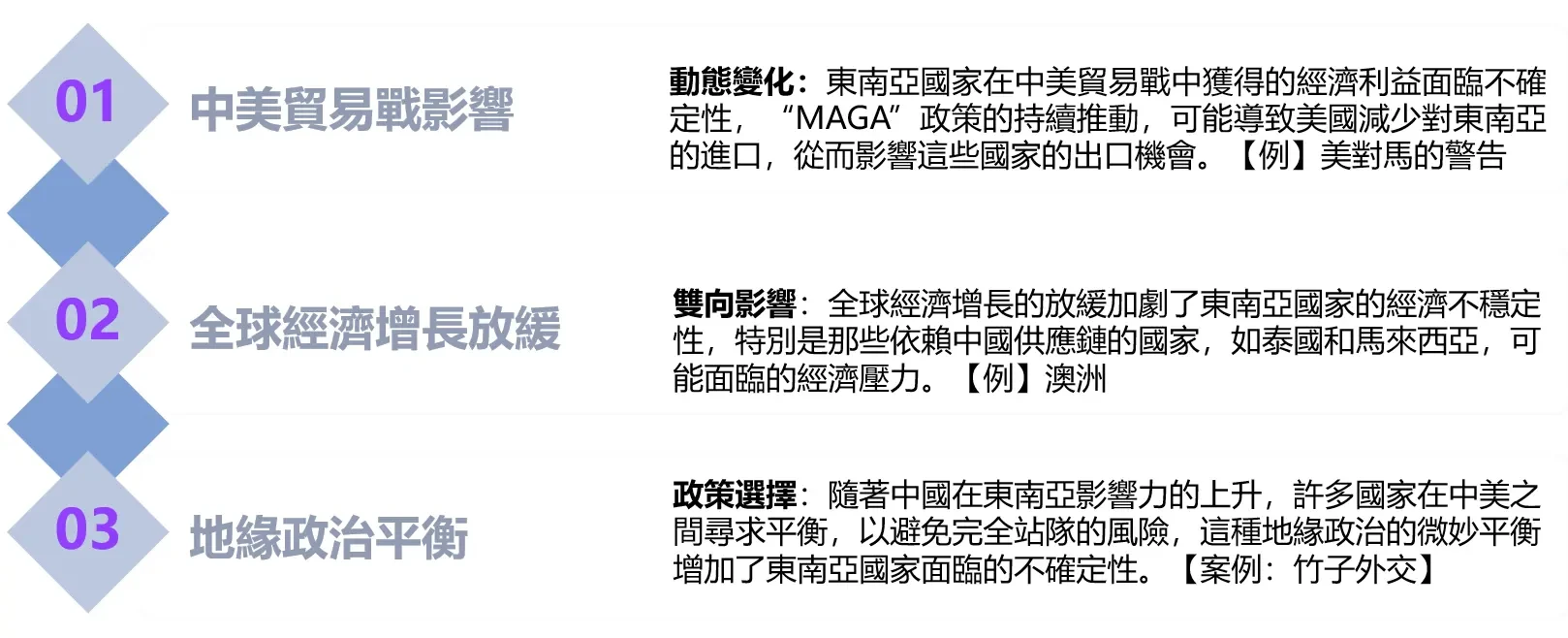
First, U.S. tariff policies will not target only China. Next, they may also impose tariffs on other countries, such as Vietnam and Malaysia. The United States has warned Malaysia, suspecting it could be used as a transshipment hub to circumvent tariffs. Malaysia's Deputy Minister of Industry specifically stated that Chinese companies should not use Malaysia as a "transit" country. This strategic maneuver directly impacts future corporate decision-making.
Second, US-China competition is only one part of the global economy. If both the US and European markets contract simultaneously, or if other major importers experience economic weakness, even strong performance from Vietnam and Malaysia will struggle to offset the decline in global demand.
Over the past three years, the Malaysian currency has depreciated significantly. This is partly due to trade tensions and another reason is weakened domestic demand in China, which has impacted Malaysia's exports and economic growth.
Australia's recent economic trends also illustrate this phenomenon. As a major resource exporter, Australia has historically supplied iron ore to China. With the recent slowdown in China's construction sector demand, concerns about Australia's economy have begun to rise.
Third, the policy choices made by host countries themselves are critical. For instance, Vietnam introduced "Bamboo Diplomacy" in 2021. This strategy demonstrates Vietnam's ability to adapt flexibly amidst a complex international landscape.
Next, we illustrate how these policy choices specifically impact global expansion within the context of geopolitical dynamics.
Case Study: Vietnam's Bamboo Diplomacy
Vietnam's Bamboo Diplomacy
Bamboo diplomacy is a policy concept proposed by Vietnam in 2021. This diplomatic strategy uses "bamboo" as a symbol, emphasizing deep roots and resilience, enabling flexibility in responding to external changes. Its core philosophy is flexible means, building broad alliances, and minimizing adversaries.
This strategy has helped Vietnam achieve significant international success, making it one of the countries with the most tariff agreements. Many accountants even recommend that business owners set up factories in Vietnam because these agreements can significantly reduce costs. However, this advice is not entirely accurate; we will explain further later.
Challenge of Playing Both Sides
Vietnam's flexibility in bamboo diplomacy has indeed created many opportunities, but this strategy also faces limitations:
Fundamental disagreements remain that cannot be bridged, even with a spirit of compromise.
Bamboo diplomacy meets territorial sovereignty, both sides must adhere to their fundamental principles.
Chinese citizens traveling to Vietnam face additional requirements due to differing views on the territorial boundaries depicted on Chinese passports, necessitating supplementary documentation for border clearance. Furthermore, obstacles may arise when Chinese nationals attempt to establish companies or purchase real estate in Vietnam, as these activities require passport-based identity verification.
Recently, Chinese consumer products have gained traction in Vietnam. Yadea Group's electric motorcycles are selling well, but a marketing campaign sparked strong protests from some Vietnamese consumers due to a border map that differed from Vietnam's perception. Stores and headquarters were surrounded by protesters. Companies going global must now formally address such issues.
These circumstances reflect the Vietnamese public's sensitivity and firm stance on territorial sovereignty. When wearing the lenses of geopolitics, This will reveal the limits of "bamboo diplomacy."
Concerns about the economic model
After the trade war, Vietnam's economic growth largely relied on the "East Supply, West Sell" model: importing raw materials from China, performing simple processing, and exporting to the U.S. In this model, Vietnam captures very little value-added. If China stops supplying or the U.S. stops purchasing, Vietnam's economy could be hit immediately.
Weak industrial foundation
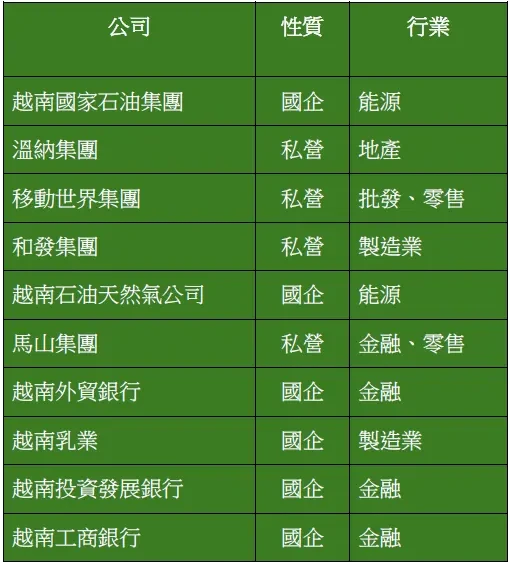
Vietnam's industrial base remains relatively weak. In 2023, most of the country's top 10 publicly listed companies were concentrated in service sectors such as financial services and real estate development, lacking a strong manufacturing foundation. This has limited Vietnam's ability to generate high-value output.
Currently, Vietnam's role in the global supply chain is largely limited to absorbing manufacturing capacity relocated from Chinese companies and exporting simple processed goods to the United States. Due to this lack of strategic depth, it has lost significant leverage in geopolitical affairs.
U.S. Concerns and Responses
Vietnam's "East Supply, West Sell" model drew U.S. attention as early as during Trump's presidency 1.0, due to the significant foreign exchange it generated in trade with the U.S. while offsetting the intensity of the Trump administration's efforts to counter Chinese manufacturing. The U.S. government began considering using Section 301 to constrain this practice. This provision is a tool that allows the U.S. President to implement trade measures under executive authority and serves as a key strategic lever in great-power competition.
Additionally, by the end of 2024, the Biden administration had already imposed tariffs on Vietnamese solar panels. These measures are beginning to challenge Vietnam's "bamboo diplomacy."
the lenses of geopolitics Bamboo diplomacy
Vietnam's bamboo diplomacy has garnered international attention and economic opportunities, yet its flexibility has limits.
Put on the lenses of geopolitics, This makes it clear that Vietnam's diplomatic strategy faces limitations: its economic model and industrial base are insufficient, exposing it to significant risks, while U.S. trade measures further increase uncertainty for its future development.
Understanding these dynamics enables businesses to make smarter decisions in their global expansion.
Case Study: The Ceiling of Vietnam's Economic Growth
The Limits of Vietnam's Growth
Vietnam's growth potential faces certain constraints. Let's compare the salary levels of engineers with 5 years of experience in Shenzhen, Hsinchu (Taiwan), and Hanoi (Vietnam). Can you guess which location is the most expensive?
According to analysis from industry experts at 2023, engineer salaries in Hanoi are the highest, surpassing those in Shenzhen and Dongguan. Engineer salaries in Taiwan are relatively lower.
Why are engineers in Hanoi so expensive?
Engineers command high salaries, primarily due to market supply and demand dynamics.
In recent years, a surge of companies entering Vietnam has created a severe shortage of engineers with 5+ years of experience. A production line engineer with 5 years of experience is typically already promoted to a supervisory role. Hiring a supervisor who previously worked at Samsung or a Japanese firm often costs more than hiring one in Shenzhen.
Of course, for entry-level engineers, Vietnam remains more affordable. This salary gap is driven by market demand.
Unique Phenomena Among Financial Executives
Next, let's discuss financial executives. According to Willis Towers Watson (WTW), the base salary for senior leaders in Vietnam's finance sector actually exceeds that of their counterparts in Taipei. Given that Taipei's GDP per capita is approximately 9 times higher than Vietnam's, this phenomenon cannot be explained by supply and demand alone.
One reason is the transitional opportunities created by economic system transformation. In Vietnam, certain financial executives hold unique resources that allow them to resolve issues others cannot, so their compensation reflects their contributions. This mirrors China's early reform period, where individuals with scarce resources could convert them into substantial gains. However, as markets become more open, this phenomenon will gradually diminish.
Challenges for Middle-Level Professionals
Vietnam's mid-level professionals have limited prior experience, and their creativity and management skills are still developing. While the global supply chain restructuring has created a surge in demand, Vietnam risks falling short if it does not rapidly cultivate engineers and mid-level managers with innovative thinking—essential for advancing into high-end industries.
The Vietnamese government places high priority on this, actively seeking global resources to drive development. For instance, the Minister of Planning and Investment personally traveled to the U.S. to invite leading semiconductor executives to serve as development advisors. Vietnam is also proactively seeking collaboration with academic and research institutions in Taiwan and mainland China. Through the construction of modern public infrastructure such as railways and airports, it is introducing advanced international technologies to accelerate the cultivation of local talent in the engineering sector.
Whether these efforts will succeed remains highly uncertain. In the projects we've been involved in, the process has been extremely difficult because it requires challenging existing systems and entrenched mindsets, often resulting in communication costs that are unsustainable for idealistic partners.
In summary, Vietnam's growth holds great potential but is constrained by limitations in talent supply, institutional transformation, and industrial foundations. Addressing these challenges requires concerted efforts from both the government and businesses.
If you put it on the lenses of geopolitics, The current population structure in Vietnam reveals a clear bottleneck: insufficient density of experienced professionals, which caps growth. However, this demographic profile also presents a distinct economic opportunity, as detailed below.the lenses of technologywill be analyzed in depth in the dedicated chapter.
Section 4:the lenses of geopolitics summary
Today, geopolitics has become a key tool for understanding international relations and economic shifts.
Trade wars, technology embargoes, and "decoupling" negotiations between the U.S. and China are putting global supply chains to a severe test. For businesses and individuals alike, making sound decisions amid uncertainty has become a major challenge.
In the past, companies viewed relocation or market expansion purely as economic decisions. However, without wearing the lenses of geopolitics, It's difficult to discern complex factors such as national interests, religious and cultural dynamics, and resource distribution.
Amidst the U.S.-China strategic competition, every nation seeks to maximize its interests, with alliances and adversaries shifting depending on the situation. Only by deeply understanding each country's core demands can we make precise moves in this vast geopolitical chessboard.
For ASEAN nations, the U.S.-China rivalry presents both opportunities and challenges.
From the perspective of global supply chain security, the United States is actively advancing "friend-shoring," "near-shoring," and "de-risking," gradually fragmenting traditional long supply chains into regionalized short ones. Many multinational corporations, after weighing costs and risks, are establishing new production lines and hubs in Southeast Asia to leverage geographic proximity and a relatively stable political environment.
Furthermore, geopolitical tensions have triggered technology embargoes and tariff barriers, prompting a new wave of global industrial restructuring. If key materials or technologies are embargoed, other regions may rapidly emerge as alternative suppliers. However, these shifts also serve as a warning to Southeast Asian nations: could they become the next targets in trade wars?
Will the U.S. increase tariffs due to "transshipment" or "substitution"? These factors must be assessed from a geopolitical perspective.
In the context of geopolitics, differences in internal conditions among ASEAN countries are becoming increasingly apparent.
Vietnam's geographic location and cost advantages previously attracted numerous companies to relocate production lines from China, establishing an "East supply, West sales" model. However, if the U.S. views this practice of sourcing raw materials in China for export to Western markets as a means of evading sanctions, it could face additional tariffs or investigation risks.
Malaysia and Thailand are also actively leveraging their respective strengths: Malaysia has invested heavily in AI and cloud infrastructure, attracting major tech companies; Thailand continues to deepen its expertise in automotive manufacturing and the EV parts supply chain. Indonesia, with abundant mineral and energy resources and a large population, is poised to become a dual market for emerging consumption and resource exports.
However, whether these opportunities can be realized largely depends on the stances taken by governments around the world in diplomacy and industrial policy.
Vietnam's "bamboo diplomacy" is a prime example. It symbolizes a strategy of being deeply rooted yet adaptable, allowing Vietnam to maintain good relations with all major powers. From signing numerous tariff agreements to welcoming foreign enterprises to set up factories, this multifaceted approach has brought substantial economic benefits to Vietnam.
However, ethnic and religious issues pose challenges to Vietnam's diplomatic flexibility: disputes over map annotations or sovereignty could trigger immediate public backlash. Moreover, Vietnam's industrial base remains relatively weak, lacking advanced manufacturing capabilities. Currently, most of Vietnam's top ten listed companies operate in finance and real estate services; few are technology firms capable of generating high value-added output.
Meanwhile, senior engineers and financial executives in Hanoi command even higher salaries than those in Shenzhen or Taipei, reflecting a talent shortage and the high cost of headhunting. When the U.S. applies pressure through tariffs or 301 clauses, it remains uncertain whether Vietnam's "bamboo" strategy can remain firmly rooted.
Restructuring the supply chain cannot rely solely on low-cost labor and convenient transportation.
Geopolitical dynamics are prompting stakeholders to reassess production layouts to mitigate risks, ensure supply continuity, and safeguard strategic resources. Companies must recognize that even the most effective supply chains can be disrupted when China and the U.S. pursue "precision decoupling" in critical technologies.
For example, the export ban on extreme ultraviolet (EUV) lithography machines has hindered certain countries from making breakthroughs in semiconductor manufacturing. In fact, tariff barriers merely increase volume, while technology embargoes impose qualitative restrictions with far-reaching impacts on industrial development. Under such circumstances, many manufacturers have adopted multi-location strategies to ensure uninterrupted supply: maintaining existing capacity in China to serve the Asian market, while establishing new factories in ASEAN countries to fulfill orders from Europe and the U.S.
This "hedging both sides" strategy, while spreading risk, also increases management costs and supply chain coordination complexity. To achieve optimal results, enterprises must thoroughly evaluate each country's culture, legal framework, and industrial ecosystem rather than simply chasing so-called "low labor costs."
In the face of complex and changing international situations,the lenses of geopolitics Not only helps enterprises see where to invest, but also reminds them how to invest.
In the past, differences between China and the U.S. were limited to tariffs and trade goods. However, with the outbreak of religious, cultural, and regional conflicts, ASEAN countries' positions could shift at any time.
The conflict in the Middle East during 2024 has prompted skepticism about U.S. diplomatic stances across the Islamic world. While differences in religious positions exist between the Islamic world and China, this shift has already tilted the balance, leading Muslim-majority nations such as Indonesia and Malaysia to reconsider their alignment and become more open to cooperation with China. This subtle geopolitical realignment is reshaping future prospects for market access and industrial collaboration.
For companies going global, relying solely on past experience or cost considerations is insufficient. A comprehensive evaluation of regional security, diplomatic relations, and industry support is essential. Only then can you chart the most advantageous investment and partnership path amidst global competition.
the lenses of geopolitics Like a magnifying glass, it helps us clearly see the interwoven interests and decision-making motivations of all parties, providing enterprises and individuals with more comprehensive and precise direction for their international strategies.
Extended Content
Put on the lenses of geopolitics: Master the big picture and choose your global expansion direction:
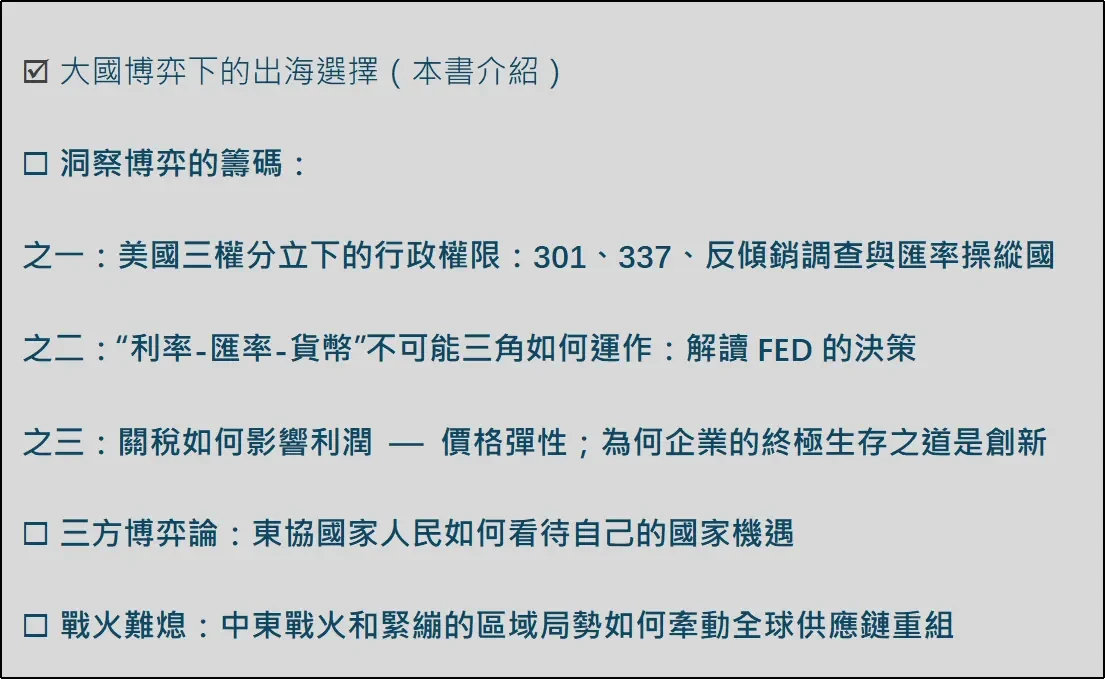
This book focuses on how to wear the lenses of geopolitics, Analyze the impact of great power competition, supply chain shifts, and tariff wars on expansion into Vietnam and Malaysia. Based on our own capabilities, we can determine the ideal path forward in terms of resources and conditions.
However,the lenses of geopolitics Its value extends further. It also equips us with a more scientific and systematic approach to quickly identify and derive insights from changes happening around us during our global expansion. We will share deeper explanations of these use cases soon. Interested readers are encouraged to explore using this framework or engage in discussion with us.
For topics touched upon but not deeply explored in this book, we first provide a concise overview to demonstrate the lenses of geopolitics unique value.
Leverage Point 1: The Pacing of the Game Is Set by the President's Executive Authority
Companies or individuals affected by trade wars should understand the leverage the U.S. holds when initiating them. Tools like Section 301, Section 337, and anti-dumping investigations are all exercises of executive authority. What other "weapons" does it have?
For instance, during a discussion with the CFO of a public company on these issues, he had no understanding at all.
He said the U.S. isn't cutting taxes? In fact, tax cuts are domestic matters decided by the legislature. Tariffs, however, can be imposed by presidential executive order. The impact on business operations and financial planning differs significantly between the two.
Once a trade war escalates, the rapid pace of tariff policy changes leaves companies no time to adjust. As a CFO, being reactive could result in a sudden, dramatic drop in stock price overnight.
Game Theory Chip #2: Exchange Rates, Interest Rates, and Money Supply Are the Hand You Hold
Great power competition also involves the overall layout of economic policies, such as the relationships among exchange rates, interest rates, and money supply. While these may be introductory concepts in economics, they form a critical foundation for national economic decision-making.
For example, the "Impossible Trinity" theory in economics states that a country cannot simultaneously maintain stable interest rates, free capital mobility, and a stable exchange rate. This is a trade-off nations must consider when balancing domestic and international interests.
The U.S. plays a unique role in this "impossible trilemma" through the Federal Reserve (Fed). Although it functions as a central bank, its corporate structure often confuses people: how can a company determine such critical economic policy?
Without understanding this context, you cannot truly grasp the U.S. cards and leverage in the game.
Game Theory Tactic 3: The Ultimate Answer to Tariff Challenges — Price Elasticity and Technological Innovation
Tariff concerns have also raised worries for many companies. Take TSMC as an example: if the U.S. imposes a 100% tariff on TSMC chips, who bears the cost? The answer is that TSMC's high-end advanced chips will be largely unaffected. Given the global shortage of high-end chip supply, customers are eager to secure supply. In reality, this tariff will be borne by U.S. customers themselves.
In other words, if your product is unique and irreplaceable, tariffs pose little threat. But if your product is just "one of many" that others can offer, tariffs will be a heavy blow.
This highlights a core issue: to survive competition, businesses must rely on innovation—not just in products, but also in processes. Without it, you risk getting stuck in a tariff deadlock.
For example, a company may plan to move its factory to Vietnam but worry that tariffs in Vietnam will rise within three months. This concern is valid because building and launching a factory takes about a year, during which tariff rates could change.
If a company's decision-making focuses only on 20%, 10%, or even just 3% tax differences, it easily falls into the trap of game theory. In that case, you might as well relocate to the U.S. and eliminate tariff uncertainty altogether. While this may sound like a joke, it highlights a key point: companies shouldn't base their global strategy solely on tariff levels. They need to plan their development path from a more comprehensive perspective.
As mentioned in the case study above, some financial advisors may fall into this trap by recommending overseas expansion based solely on tax rates.
Additionally, there are also Mr. Paul S.P. Hsu Innovation in technology service export models driven over the past two decades.
Tariff challenges are not new to the Trump era; they have deep roots. However, since his inauguration, global tariff policies have shown a trend of reverting to old patterns. 20 years ago, the world was in a phase of reducing tariffs among trading nations. After 20 years, it has returned to a cycle of mutual tariff increases.
Regardless of repetition, global trade history shows that if supply chain profits rely solely on physical goods trading, they will inevitably be highly susceptible to tariffs.
However, when outputs are intangible assets such as intellectual property (IP), technology, or services, companies can more flexibly navigate tariff barriers and achieve a more resilient global profit model.
This approach is known as service-enabled supply chains, where companies evolve from delivering standalone products to offering comprehensive solutions and value-added services. To enhance competitiveness, organizations must leverage their core IP, technology, or proprietary know-how, then tailor outputs to meet diverse market demands by providing differentiated products and services.
Ultimately, the key to corporate survival lies not in where production takes place, but in how innovation is driven. Only by continuously optimizing products and processes can businesses find a true path forward amid great power competition.
Third-party participants
When discussing great power competition and US-China rivalry, there is a crucial third party often overlooked: the host country.
Going global isn't about drifting at sea; it ultimately means establishing a presence in a specific country. How people in that country perceive this initiative and their ability to participate in it are critical factors with significant influence.
Many overlook the critical role of third parties. In great-power competition, focusing solely on bilateral interactions misses a key player. Real breakthroughs often come from a third nation's involvement—much like in *Romance of the Three Kingdoms*—where only with third-party participation can a true winner emerge.
How do Vietnamese people view their recent rise?
When you think of ASEAN or Southeast Asia, does the green area on the left come to mind first? But if you ask someone from Vietnam, they might say they belong in the blue area on the right. Why is that?
They see themselves as a Pacific Rim nation, closer to Japan, South Korea, and China, and are pursuing a development path that diverges from China's. As they state: "We are the group on the right-hand side of this chart. We are not the green section, nor the countries on the left—we are different from them."
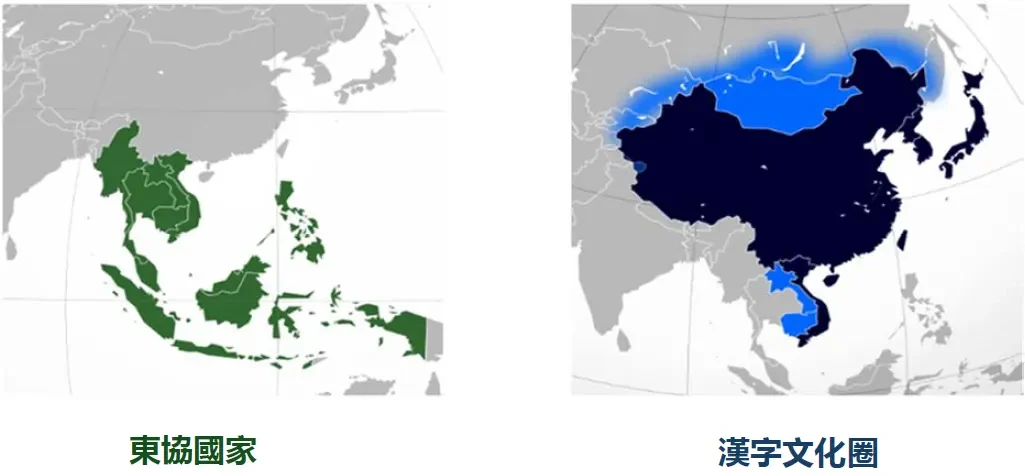
Shift perspective to instantly clarify your stance.
This process is called the "framing effect." Different frames shift your perspective, and your perspective shapes your worldview and how you think and communicate. This is why we wear... the lenses of geopolitics, Reason for reobservation.
Leverage third-party public sentiment and use economic expectation effects to influence the outcome of the game.
In 1997, South Korea faced a financial crisis, with foreign exchange reserves on the brink of collapse. According to BBC reports, even housewives and athletes donated their gold to help stabilize the country's foreign reserves. Although South Korea suffered a major defeat in that international financial battle, it managed to recover and achieve at least two decades of economic prosperity—a turnaround closely tied to its people's resilience.
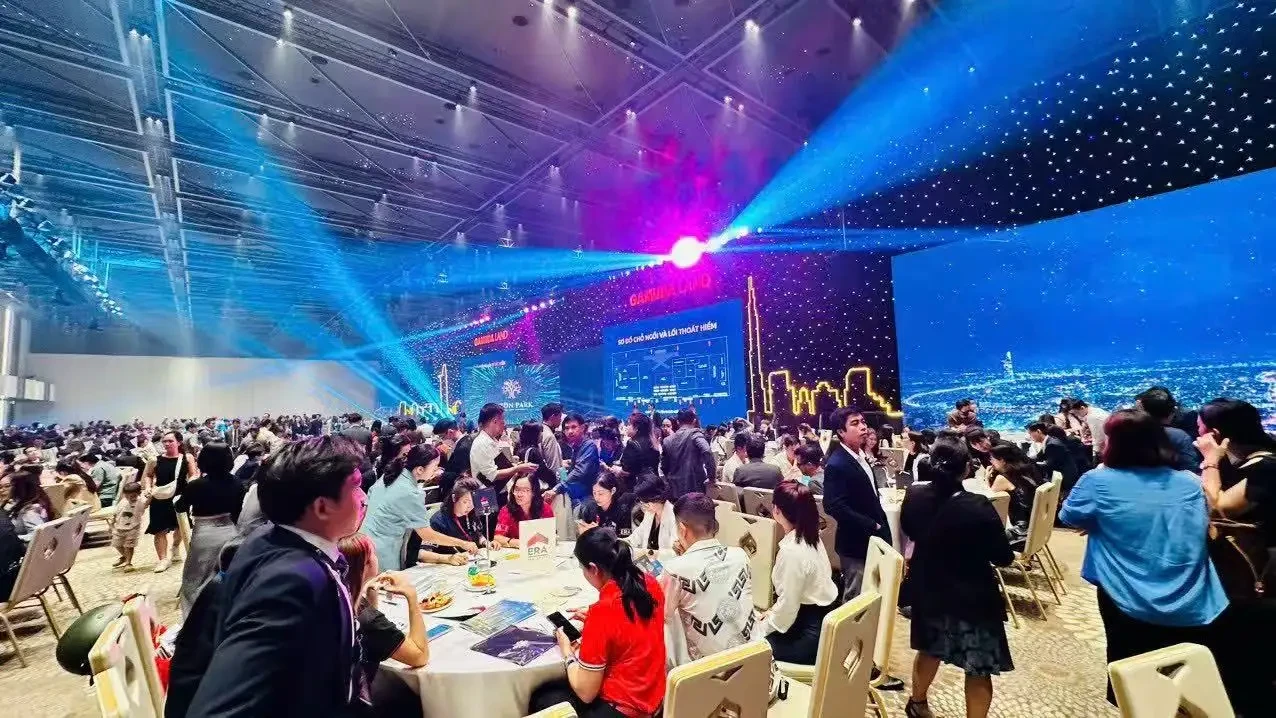
Now look at Vietnam today, where the situation is equally unique. The image above shows a real estate project launch event with a venue packed to capacity, resembling a major concert. In Ho Chi Minh City, an average of 6 people register interest for every property launched. This means that out of 6 buyers competing, only one will succeed in purchasing. Yet, housing prices remain extremely high. With a price-to-income ratio of 50:1, what does this imply? It means an average Vietnamese worker would need to work for 50 years without spending a single dollar on food or shelter just to afford a home.
Yet, despite this, these homes are still snapped up. Why the rush? What do people believe? How do they view the country's future?
Confidence is regarded as the golden pillar of the economy. Especially amid weak domestic consumption, many people's confidence in economic prospects has waned. But what happens when confidence becomes excessive?
Economics treats confidence as central to behavioral science: the collective beliefs people hold often shape reality itself.
Specifically, rising consumer confidence directly impacts household debt and spending patterns. As confidence grows, households become more willing to take on debt to support consumption, reflecting an optimistic outlook for the future economy.
Taking Vietnam as an example, if the public is confident in their country and believes they can play a significant role as a third party in great power competition, this confidence will have a profound impact on the current situation.
Vietnamese youth are full of confidence in the country's future development. Almost all our Vietnamese friends believe that the nation is actively working to improve people's living conditions. The younger generation we know also largely holds an optimistic outlook for Vietnam's future and firmly believes that Vietnam will achieve greater progress in the next 15 years.
This confidence not only strengthens national cohesion but also enhances international recognition of Vietnam. Public confidence enables Vietnam to demonstrate greater autonomy and influence in global affairs, positioning it as a significant third party in geopolitical dynamics.
So, how do these host countries view this massive wave of going global? What do they need? Where are they seeking complementary advantages with outbound enterprises or individuals? And what concerns them? All of these are... the lenses of geopolitics the observation points to focus on individually and derive insights from.
War is hard to extinguish
Global conflicts show no signs of abating. Though they may seem distant, their impact on us is profound and unsettling.
Put on the lenses of geopolitics, The war is reshaping global supply chains from two angles, creating new opportunities for businesses going global.
First, the turmoil and economic recession caused by war.
Oil and gas production cuts caused by the Russia-Ukraine war, along with disrupted shipping routes for wheat and corn, have plunged European economies into crisis. As we previously analyzed, geopolitics significantly impacts offshore activities. To understand this impact, you must grasp one of three key factors: the global economic cycle. When the global economy is in recession, going offshore alone cannot generate significant growth.
Furthermore, the impact of global conflicts on trade, cooperation, investment, and exchange cannot be overlooked.
Take Saudi Arabia and Dubai as examples: these Middle Eastern markets are becoming hot investment destinations. However, financial institutions often face delays at local airports due to missile alerts, unable to depart until safety is confirmed. In such tense conflict zones, executing cross-border investments and partnerships remains highly challenging.
On the other hand, there are changes brought by war and opportunities for post-war reconstruction.
We see that due to Western sanctions, Russia has been expelled from the SWIFT banking system and its international assets frozen. In response, Russia is forging new paths by collaborating with friendly nations to explore alternative settlement methods, including the use of cryptocurrencies, creating entirely new business opportunities for financial service providers.
Moreover, in regions like Ukraine, international capital is already poised to act. While waiting for the war to end to participate in reconstruction, they are not waiting until the conflict is fully over; bidding preparations have already begun. These factors are profoundly reshaping global supply chains.
- Book
- The Chinese Diaspora
- Author
- Dr. Jili Chung
- Section
- Subject
- Words
- Appointment11,422Character
- Reading
- Appointment29minutes